
Do Ink Tank Printers Dry Out? What Every Buyer Should Know
| Feb 11, 2026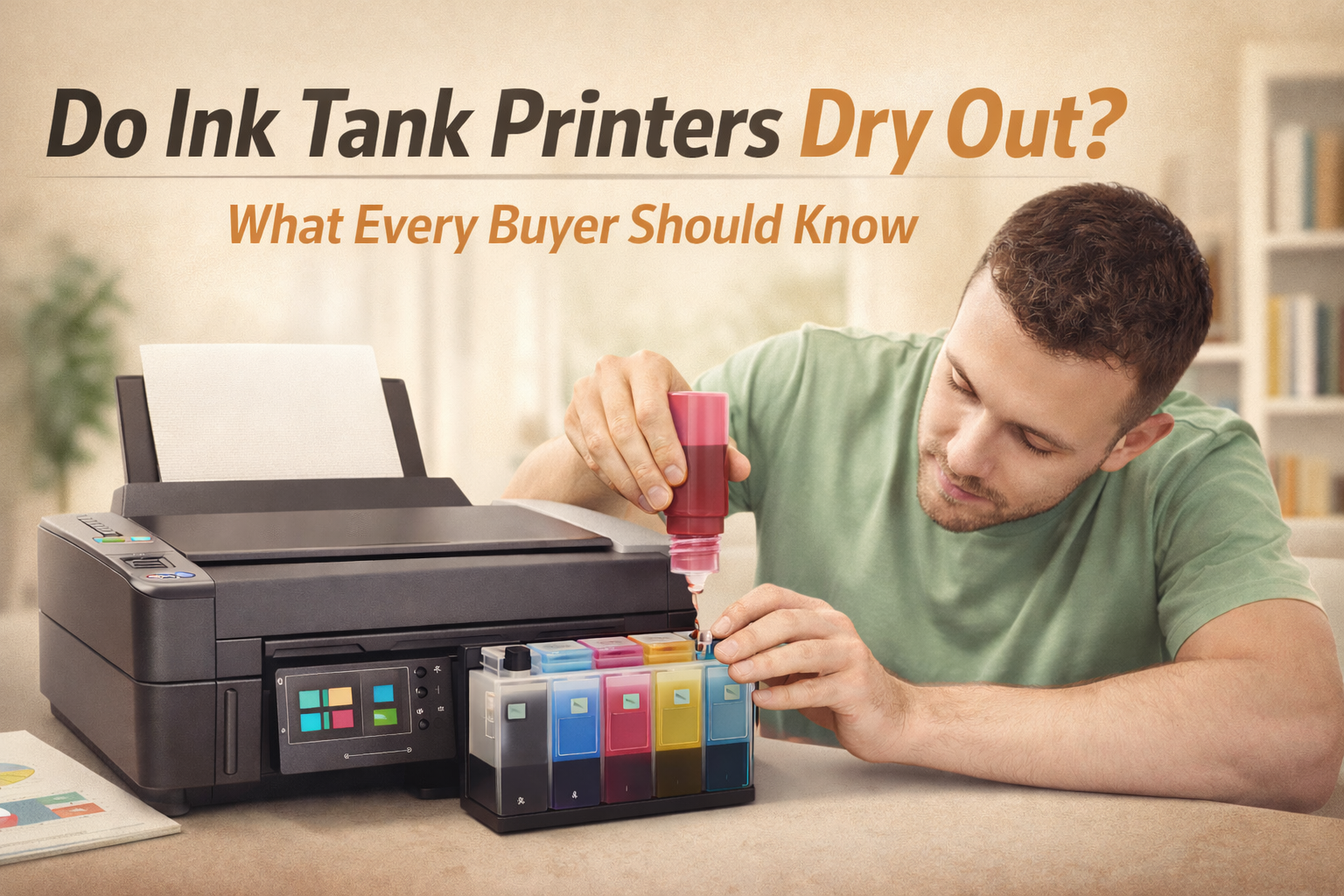
Ink drying is the silent killer of printers. One day everything works fine, and the next, prints come out faded—or not at all. This is why many buyers pause and ask do ink tank printers dry out before switching from cartridges. The concern is real, especially for users who don’t print daily. Traditional inkjets are known for clogged nozzles and wasted ink, which raises another common question: Do tank printers dry out the same way? With the rise of the ink tank printer, confusion has only increased around maintenance and ink reliability. Many users also compare ink tank and cartridge printers to avoid repeating past frustrations. Fears around ink tank dry out make people hesitant to invest.
This article clearly explains:
- Do ink tank printers dry out compared to cartridge printers
- Why ink dries in printers and how tank systems reduce this risk
- Whether ink tank printers suit occasional and regular users
What Is an Ink Tank Printer and How Does It Work?
An ink tank printer is an inkjet printer with large, refillable reservoirs that supply ink to the print head. The larger ink supply and sealed design reduce exposure to air, making users ask less frequently do tank printers dry out. However, some still wonder will ink tank printers dry out if left unused.
How Ink Tank Systems Deliver Ink to the Print Head
Ink flows from the tanks to the print head through airtight tubes. This keeps ink moving and prevents ink tank printer ink dry. Automatic maintenance cycles in most ink tank printers keep the print head moist and ready to print, reducing the risk of drying.
Key Difference Between Ink Tank Printers and Cartridge-Based Inkjet Printers
| Feature | Ink Tank Printers | Cartridge Printers |
|---|---|---|
| Ink Storage | Large, refillable sealed tanks | Small, disposable cartridges |
| Drying Risk | Low – less chance of the ink tank drying out | High – ink dries faster |
| Ink Exposure | Minimal, airtight system | High, exposed at the print head |
| Maintenance | Automatic cycles keep the print head moist | Frequent cleaning needed |
| Cost Efficiency | Lower cost per page | Higher cost per page |
Ink Tank vs Ink Cartridge Printers: Key Differences That Affect Drying
When comparing ink tank vs cartridge printers, one of the biggest concerns is ink drying. How ink is stored, exposed, and delivered directly affects whether a printer will clog or maintain consistent performance. Understanding these differences helps answer the question, “Do ink tank printers dry out?” and why tank systems are more reliable.
- Ink Storage: Refillable Tanks vs Sealed Cartridges: Ink tank printers use large, refillable tanks, reducing refill frequency and the chance of ink tank printer ink drying. Cartridge printers hold less ink, which dries faster if not used regularly.
- Ink Exposure to Air and Evaporation Risk: Airtight tanks in ink tank printers minimize evaporation, while cartridge nozzles are exposed, increasing the risk of drying and clogs. This explains why users ask do tank printers dry out more often than tank models.
- Print Head Placement and Ink Flow Design: Ink tank systems deliver ink through tubes to the print head, keeping ink moving and preventing clogs. Cartridge printers often integrate the print head in the cartridge, which can dry quickly when idle.
- Why These Differences Matter for Drying Issues: Larger ink volume, airtight tanks, and steady flow reduce drying in ink tank printers. While no printer is fully immune, tank systems are more reliable than cartridges for consistent printing and less maintenance.
Do Ink Tank Printers Dry Out the Same Way as Cartridge Printers?
Ink tank printers are designed to reduce drying issues compared to cartridges. While ink tank printers drying out is still possible if unused for long periods, sealed tanks and steady ink flow make clogs far less common.
How Drying Happens in Cartridge Printers
Cartridges hold small ink units. Unused ink at nozzle tips is exposed to air and dries quickly, causing clogs, faded prints, or failed prints. This is why many ask if tank printers dry out just like the ink cartridges.
Why Ink Tank Printers Are Less Prone—But Not Immune—to Drying
Sealed tanks and continuous flow prevent most ink tank printer ink dry issues. Regular printing keeps nozzles ready. So if you ask, “Will ink tank printers dry out?” The answer is while long inactivity may cause minor clogs, this will be a rare problem.
Why Ink Dries Out in Inkjet Printers?
Inkjet printers, including ink tank printers, can experience drying at the print head nozzles. Factors like inactivity, air exposure, and environmental conditions determine how quickly ink tank printer ink dries. Understanding these helps answer the question, “do ink tank printers dry out” and why cartridges are more prone to clogs.
- Print Heads, Nozzles, and Ink Evaporation: Idle nozzles let ink evaporate, causing the ink tank to dry and clog. Cartridges dry faster due to smaller ink volume, hence, it is recommended to use the printer at least once or twice a week.
- Role of Inactivity, Temperature, and Humidity: Long inactivity, heat, or low humidity speeds up drying. Even ink tank printers dry out depending on these factors. Regular use prevents the ink tank dry out.
- Why Infrequent Printing Causes Clogs: Unused ink thickens or dries at the nozzles. Cartridge printers clog faster. Sealed tanks and steady flow in ink tank printers reduce this risk, hence why do tank printers dry out less often.
Ink Tank Printer Care: Do Tank Printers Dry Out and How to Prevent It
Even though ink tank printers are less prone to drying than cartridge printers, proper care is essential. Following simple habits can prevent ink tank printer ink dry and reduce the risk of clogs. These tips help answer the question, “Do ink tank printers dry out?” and keep printing smoothly.
- Best Practices for Home and Office Users: Use your printer regularly and maintain it according to the manufacturer’s instructions. Awareness of ink tank vs cartridge printers helps prevent ink tank dry out.
- Recommended Print Frequency: Print at least once a week, even a small page or color block. Regular printing keeps the ink moving and prevents ink tank printers from drying out.
- Keeping the Printer Powered On: Keep the printer plugged in so automatic maintenance cycles can run. This reduces the chance that tank printers dry out.
- Environmental Storage Tips: Store the printer in a stable, room-temperature environment. Avoid extreme heat or humidity to prevent the ink tank printer ink from drying.
- Using Manufacturer-Recommended Ink: Always use genuine ink bottles or high quality compatible ones. They are formulated to resist drying better than cheap third-party alternatives, ensuring ink tank printers dry out less often.
- Simple Habits That Reduce Clogging Risk: Check ink levels regularly and refill promptly. Occasional maintenance and proper storage help avoid the ink tank from drying out and ensure reliable printing for months.
Final Answer
Do tank printers dry out? The simple answer is: rarely. Ink tank printers feature sealed reservoirs and steady ink flow, making them far less prone to drying than traditional cartridge printers. While extended periods of inactivity can cause minor clogs, routine use and proper care prevent most issues. Compared to cartridges, which hold small amounts of exposed ink, ink tanks show a clear advantage for long-term reliability compared to traditional ink cartridges. Factors such as print frequency, environmental conditions, and the use of genuine ink play a key role in preventing ink tank printer ink from drying. Home users, offices, and students who print regularly can confidently choose an ink tank system. For infrequent users, occasional maintenance keeps the printer ready to print. Overall, do ink tank printers dry out? Very rarely, making them a smart, cost-effective choice for consistent, high-volume printing.
Ready to switch to hassle-free printing? Explore reliable ink tank printers today!
Frequently Asked Questions
1. Do ink tank printers ever dry out?
While ink tank printers are designed to minimize drying, they can still experience minor clogs if left unused for extended periods. Regular printing and maintenance help keep the nozzles clear and prevent ink tank printer ink dry.
2. Are ink tank printers completely maintenance-free?
No printer is entirely maintenance-free. Even tank printers dry out occasionally, so running small test prints and performing routine cleaning cycles is recommended to maintain smooth operation and prevent ink clogs.
3. Can I use third-party ink to prevent drying?
Using cheap quality third-party ink can increase the risk of ink tank printer ink dry and may affect print quality. Manufacturer-recommended ink premium quality compatible ink are formulated to resist drying, ensuring the printer runs efficiently and lasts longer.
4. Are ink tank printers only suitable for heavy users?
Not at all. Even occasional users can benefit from ink tank printers, as long as they print occasionally, keep the printer powered on, and store it properly. These habits prevent ink tank dry out and maintain consistent printing quality.
5. Do cartridge printers resist drying as well as ink tank printers?
Cartridge printers hold less ink and are more exposed to air, making them prone to clogs if unused. Compared to ink tank printers, cartridges are more likely to dry out, requiring frequent cleaning or replacement.
Related Articles
Ink Tank Printer: How to Refill Safely? | Guide 2025
Ink Tank vs Cartridge Printers: Which One Saves You More?
How to Fix Epson EcoTank Clogged Nozzle: Complete DIY Solution